Bedroom design & sleep comfort
Adjustable Bed Bases: How Elevation Changes Comfort and Mattress Fit
A bed does not have to remain flat. An adjustable base can lift the head, raise the legs, or move both ends independently, turning a familiar sleep surface into a more flexible place to read, rest, and settle in for the night. The details that make this useful, however, begin beneath the mattress.
For generations, the bed was a fixed piece of furniture: a frame, a foundation, a mattress, and a position dictated by gravity. Adjustable bed bases loosen that arrangement. At the touch of a control, the head can rise for a book or a screen; the foot can lift for a different resting posture; both can move together into a position that feels more natural than lying flat.
That change can be small in appearance and consequential in everyday use. A modest incline may make reading more comfortable. A raised leg section can alter how the body rests against the mattress. And a base that moves beneath the bed affects more than posture: mattress flexibility, room layout, bedding, power access, and the habits of anyone sharing the bed all enter the calculation.
The central question is not whether an adjustable base can move. It is whether its range of movement, the mattress above it, and the room around it work together. A little planning can distinguish an adaptable bed from an awkward piece of machinery that is rarely adjusted.
What an adjustable base actually changes
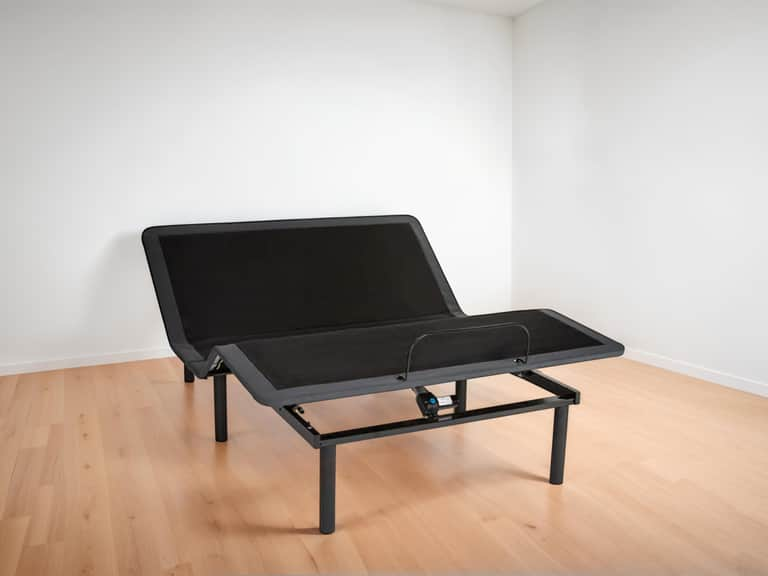
An adjustable bed base replaces or incorporates the support system beneath a mattress. Instead of holding the mattress in one horizontal plane, it uses moving sections to elevate the head, the feet, or both. Many models are controlled with a handheld remote, while features and movement options vary by model.
Head elevation is often the most visible adjustment. It can create a more upright position for reading, watching television, or relaxing before sleep. Raising the foot section changes the angle of the lower body. When both ends move independently, the sleeper can combine elevations rather than choosing a single fixed tilt. Some bases offer preset positions; others let users save settings or make adjustments in smaller increments.
These are positioning options, not a guarantee of better sleep or a substitute for medical care. Comfort is individual, and a position that suits one person may feel uncomfortable to another. Anyone considering elevation to address a health concern should seek advice from a qualified clinician rather than treating a furniture feature as a medical solution.
The practical advantage is choice. A traditional foundation offers a single surface angle. An adjustable base lets the user change that angle to suit an activity or preference, then return the bed to a flatter position when desired. The best setting is not necessarily dramatic. For many routines, a small movement is easier to live with than a steep incline.
Start with the way you expect to use it
Before comparing specifications, picture an ordinary evening. Will the bed mainly be adjusted for reading? Is the goal to create a more comfortable position for winding down? Do you expect to raise the legs occasionally, or will the bed be repositioned several times a day? These answers help clarify which functions are genuinely useful and which may add complexity without improving the routine.
Independent head and foot movement can offer more flexibility than a single coordinated incline, but additional movement is not automatically an advantage for every household. A simple head lift may cover the needs of someone who wants to sit up comfortably. Someone who values several distinct positions may prefer more control. The right choice is the one that fits real habits rather than a list of features that sounds impressive in a showroom.
Controls matter because they determine how easily the bed becomes part of daily life. Check whether the remote is wired or wireless, whether its buttons are easy to distinguish, and whether the controls offer presets or customizable settings. If two people share the bed, consider whether they need separate sides with independent adjustment. Confirm the configuration carefully: split arrangements and mattress requirements can differ from a single-piece setup.
It is also worth considering noise and movement in the context of the room. A mechanism that operates smoothly in a store may sound different in a quiet bedroom. If possible, test the base in operation. Notice how gradually it moves, whether the mattress shifts, and how simple it is to return the bed to its original position.
Mattress compatibility is not a small-print detail
A mattress on an adjustable base has to bend as the platform changes shape. Some mattresses are designed to flex; others are not. A mattress that is too rigid, too thick for a particular mechanism, or otherwise outside the base manufacturer’s specifications may not move as intended. Compatibility should be verified before purchase, not assumed from the fact that a mattress fits the bed’s width and length.
Start with the mattress manufacturer’s guidance. Look for confirmation that the mattress is suitable for an adjustable foundation and check any stated limits on thickness, construction, or use. Then check the adjustable base documentation for its own requirements. Both sides of the pairing matter: a mattress may be described as flexible, while a base may still specify conditions for proper fit and operation.
Construction can influence how a mattress responds to elevation. Foam and many hybrid designs are commonly made to flex, but product construction varies, so the material label alone is not enough. Innerspring models also differ: some may be designed for use with adjustable bases, while others may not have the necessary flexibility. A traditional rigid foundation or a mattress with a stiff, inflexible structure may be unsuitable. The reliable answer is the manufacturer’s compatibility statement for the exact model.
Also consider how the mattress behaves when tilted. Does it stay centered? Does the surface remain comfortable at the positions you expect to use? Does the mattress return to its usual shape after the base lies flat? A flexible mattress should move with the platform rather than resist it, but the feel of that movement is personal. Testing the combination, where possible, can reveal issues that specifications cannot.
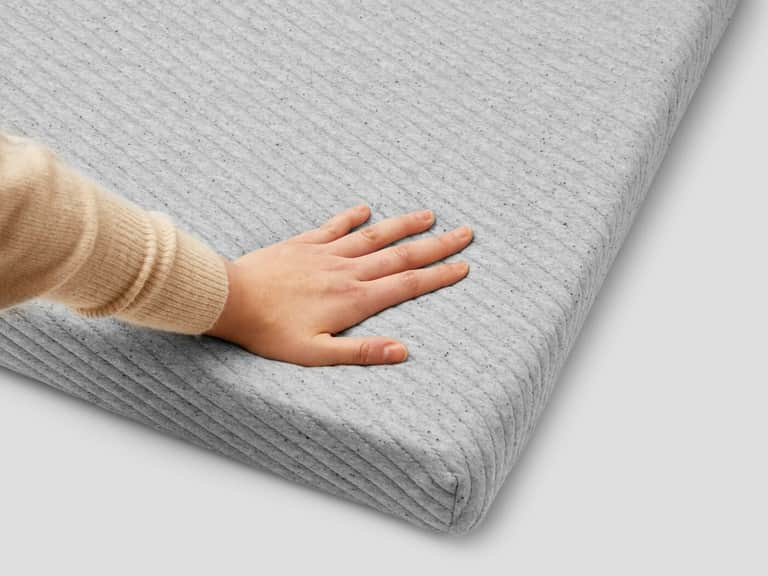
Adding a topper is another variable. A topper can change the feel of the sleep surface, but its flexibility, thickness, and ability to remain in place during movement matter. For example, a two-layer foam mattress topper has a responsive top layer, memory foam support, and a stretchable quilted knit cover. Before pairing any topper with an adjustable bed, check that its construction works with the mattress and base, and confirm that it will not shift or bunch when the surface moves.
Fit includes more than mattress size
The dimensions of the base and mattress must match, but physical fit does not end at the bed frame. Adjustable bases have a footprint, a height, and moving sections that need room to operate. Measure the space where the bed will sit, including the path through hallways, doorways, and stairwells. A base that fits in the room may still be difficult to bring into it.
Check the bed frame or foundation arrangement as well. Some adjustable bases are designed to sit directly on a platform, while others may be used with particular frames or pedestal setups. A base’s legs, support points, and overall dimensions can affect whether it is compatible with existing furniture. Do not assume that a standard-looking frame will accommodate every adjustable mechanism. Use the manufacturer’s installation instructions to confirm what can be kept and what may need to change.
Height deserves attention before the base is assembled. Adjustable models can have multiple leg-height settings, but the combined height of the base, mattress, and any topper determines how easy it will be to get into bed and out again. A taller arrangement may change the visual balance of a room or bring the mattress close to a windowsill, headboard, or bedside surface. A lower setting may suit some spaces better, while leaving too little clearance beneath the bed for storage.
Moving parts also need breathing room. A nearby wall, footboard, bedside cabinet, or cable can interfere with movement or become caught as the bed changes angle. Leave enough space for the base to operate as directed. If the bed has a headboard or footboard, verify clearance against the base’s instructions rather than relying on appearance alone.
Power, cables, and the furniture around the bed
An adjustable base needs access to power. Identify the outlet before positioning the bed and consider whether the cord can reach without crossing a walkway or becoming stretched when the bed moves. Extension cords, power strips, and cable routing should be handled according to the manufacturer’s instructions and local electrical guidance. A clean installation is both safer and less irritating in daily use.
Bedside furniture may need to move. A nightstand placed at the right height for a flat mattress may become inconvenient when the head section rises. A lamp, phone charger, or glass of water should remain accessible without leaning across a shifting surface. Try the bed in the positions you expect to use and see whether the furniture still works where it is.
Think about what sits on the mattress, too. Fitted sheets should be the correct size and deep enough for the mattress, while bedding should have enough room to move with the surface. A duvet or blanket can slide differently as the bed tilts. Pillow placement may also need adjustment when the head section rises. These are manageable details, but they are part of the experience—not afterthoughts.
For a shared bed, movement can affect both sleepers, especially if the base adjusts as one piece. Discuss how often each person expects to change positions and whether a split configuration is worth considering. Confirm that the selected mattress and base are intended to work together in that configuration. The aim is not merely to fit two people on one mattress; it is to create a setup that neither person has to negotiate constantly.
A useful checklist before buying
Comparing adjustable bases becomes easier when the questions are specific. Product descriptions often emphasize features; a checklist brings the decision back to the room and the routine.
- Intended positions: Decide whether you need head elevation, foot elevation, independent movement, or a small set of presets.
- Mattress approval: Confirm compatibility for the exact mattress model and the exact base, including any limits on thickness or construction.
- Dimensions: Measure the room, the existing frame, the delivery route, and the assembled bed height.
- Clearance: Check the space around the bed, including headboard and footboard clearance, furniture, and moving sections.
- Controls: Test the remote if possible. Consider button layout, ease of adjustment, and whether presets are useful.
- Electrical access: Locate a suitable outlet and plan a cable route that will not become an obstacle.
- Shared use: Decide whether a single moving surface meets both sleepers’ needs or whether another configuration should be explored.
- Care and support: Read warranty terms, setup requirements, weight limits, and instructions for maintenance or troubleshooting.
That last item is easy to overlook. An adjustable base is mechanical furniture, so the warranty and support process matter. Read what is covered, how long coverage lasts, and whether installation or service requirements apply. If the base has a stated lift capacity, compare it with the manufacturer’s guidance for the complete setup. Do not infer a safe working limit from the product’s appearance or from the weight rating of a different component.
Using elevation without making it a project
Once installed, an adjustable base works best when adjustments are simple and deliberate. Start with a low elevation and move gradually until the position feels comfortable. Take note of how the mattress, pillows, and bedding respond. A setting that feels pleasant for a few minutes of reading may not be the position you want for a full night, so give yourself time to understand the difference.
Keep the remote somewhere consistent. If the bed offers customizable presets, use them for positions that are actually part of the household routine. Presets can reduce button pressing, but they are most useful when they reflect settings a person likes and can comfortably return to. If the preferred position changes, it is easy to adjust again.
It is sensible to check the base occasionally for signs that bedding or cables are interfering with movement. Follow the manufacturer’s instructions for cleaning and maintenance, and avoid putting hands or objects near moving parts while the base is operating. If the mechanism behaves unexpectedly, stop using it and consult the product guidance or support rather than trying to force it back into place.
A model of flexibility, with practical specifications
The Clean Bedroom Level 1 Adjustable Bed Base illustrates the sort of specifications worth comparing. Its listed features include independent head and foot lift, a wireless remote with customizable presets, and seven adjustable leg-height settings. It is described as platform- and pedestal-friendly, with listed sizes including Twin XL, Queen, and King. Those details may help a shopper identify questions to verify: whether a particular mattress is compatible, which height works in the room, and whether the chosen size suits the existing frame and delivery route.
Specifications are a starting point, not a verdict. The presence of multiple height settings does not tell you which height will feel right in a particular bedroom. Nor does a list of movement features establish that every mattress can be paired with the base. Confirm measurements, instructions, compatibility, and warranty terms for the exact configuration before making a decision.
The bed as a more adaptable part of the room
An adjustable bed base changes the familiar relationship between a person and a mattress. The bed becomes less like a fixed platform and more like a piece of equipment that can respond to different moments: sitting up with a book, easing into rest, or returning to a flat surface. The appeal is not novelty so much as control over position.
That control only feels effortless when the system is well matched. The mattress must flex as intended; the frame and room must allow movement; controls must be easy to use; and cables and bedside furniture must stay out of the way. A little attention to these conditions prevents a useful feature from becoming a daily inconvenience.
The most successful setup is therefore not necessarily the one with the most functions. It is the one that fits the sleeper, the mattress, and the room—and still feels straightforward after the first week. Elevation can make a bed more versatile. Compatibility and thoughtful setup are what make that versatility practical.